>>
HOME, a film, released on 06-05-09, by French photographer Yann
Arthus-Bertrand
* * *
>>
Vegan Buddhist Nuns Have Same Bone Density as Meat Eaters:
Australian
medical researchers found that although the
105 post-menopausal vegan (consuming no meat, no dairy, no eggs)
Vietnamese Nuns in the study had 1/3 of the daily intake of calcium than
the meat eaters, the vegan nuns' bone density was the same as the women
who eat meat (animal protein) and diary. The researchers note that
fruits and vegetables are likely to have positive effects on bone health.
***
If you have medical
conditions, or are on medications, you must first consult your physician for
any drug-diet interactions before making major changes to your diet.
If you are on warfarin (Coumadin), you must let your health care provider
know before increasing your intake of dark green leafy vegetables. if
you are on blood thinning medications such as aspirin or warfarin (Coumadin),
talk to your health care provider before taking omega-3 supplements. ***
***
Please consult your
physician first if you are considering over-the-counter, nutritional or
herbal supplements. For example, brewer's yeast and spirulina have
drug interactions.***
***
No endorsement intended, but here are
some online resources:
-
For the first 6 months, you are likely to
feel hungry around the clock. This is not the time to focus on weight
issues (but do limit your total caloric intake from fats, avoid saturated
fats like coconut oil and palm oil, avoid trans fat [in most commercially
baked goods and in some margarine], limit your intake of sugars [including:
corn syrup, high-fructose corn syrup, fruit juice concentrate, maltose,
dextrose, sucrose, honey, maple syrup], and limit your
daily salt intake to 6 teaspoons). Instead, emphasize:
1) Flavor: Amplify your favorite flavors,
for example, spicy or sweet and sour. Try grilling and toasting
for added flavor. When making soups with root vegetables, try
first caramelizing them in a non-stick pan.
Use garnishes such as roasted sesame seeds and roasted seaweed.
Use iodized sea salt, or add sea salt [which does not supply iodide] to
your regular iodized salt for better flavor. Ginger adds great flavor to soups and dishes, and a little goes a long
way. Try boiling edamame (soy beans) with some ginger and sea
salt.
2) Satiety: For example, add nuts and
vegetarian cheese to your diet. Add extra virgin olive oil to your
salads. To get you through the first 6 months, have on hand
snacks, seasoned seaweed slices, trail mixes, popcorn and hard candy (use caution in choking risks) when
hunger attacks, and taper off later. Some easy healthy snack
ideas include: Boiled edamame [soy beans] with some ginger and sea
salt, and steamed/baked yam.
3) Variety, Balance & Moderation:
Eat a rainbow a day!
If your foods span a rainbow of colors, most likely you have achieved
variety. Moderation is key. For example, too
much oxalate-containing foods [spinach, rhubarb, beets, nuts, chocolate,
black tea, wheat bran, strawberries, and beans] or foods high or
moderate in purine [yeast, spinach, asparagus, beans, lentils,
mushrooms, and dried peas] could exacerbate gout.
4) Nutrition: Rotate your menus every day to
make sure your diet contains all the nutrients you need. Common
areas of concern are:
- Protein: It is not hard to meet your daily requirement
as long as you stay on a well-balanced,
well-sourced diet.
A slice of bread provides 3 to 5 grams of
protein, 1/4 cup of walnuts 5 grams, 1/2 cup canned spinach 5 grams,
a bag of microwave popcorn 9 grams, and even a sheet of
roasted seaweed or a tablespoon of soy sauce contributes 1 gram of
protein.
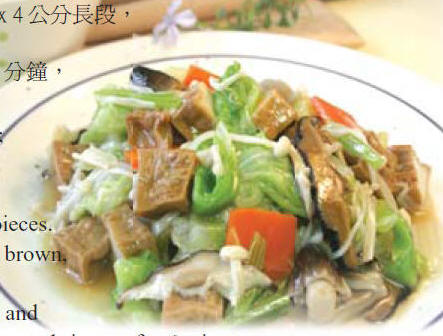
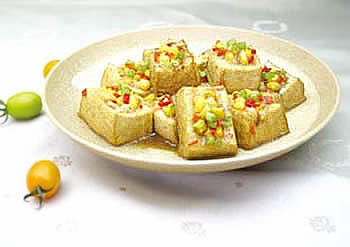
One square of baked/braised tofu[豆干]
could provide as much as 15 grams of protein and 40% of the calcium
you need per day ["Percent Daily Value"] depending on the brand you choose.
To get complete essential amino acids, combine food groups, e.g.,
combinations of rice (grains) and beans (legumes). Of note, quinoa
alone provides complete protein, and is high in iron, zinc, phosphorus,
magnesium, and several vitamin B's.
- Iron:
Vegetarian sources include dried beans and peas,
nuts and seeds, whole grains, dark molasses, and green
leafy vegetables.
- Omega-3 oil: Flax oil
[flaxseed oil], available from pharmacies, is rich in omega-3 oil.
Do not cook with flax oil. Use it on foods that have been
cooked, or on salads. Walnut oil is rich in omega-3 as well.
-
Vitamin B12: Breakfast
cereals are usually fortified with vitamin B12. Soy milk also
provides some vitamin B12, so do vegetarian cheeses, e.g, Veggie Shreds
and Veggie Slices manufactured by Galaxy Nutritional Foods.
Nutritional yeast usually supplies vitamin B12, but brewer's yeast
has low amounts, if any--check the labels as the content varies by
brand.
- Vitamin A:
Sweet potatoes, carrots, and goji berry [枸杞
wolfberry, also a source of iron] are good
sources.
- Basically, refrain from eating any sentient being with a
face and/or some form of legs, and that tries to run away--or even just
passively resists being eaten as in the case of clams, oysters, sea urchins,
squids/calamari--when you try to catch it
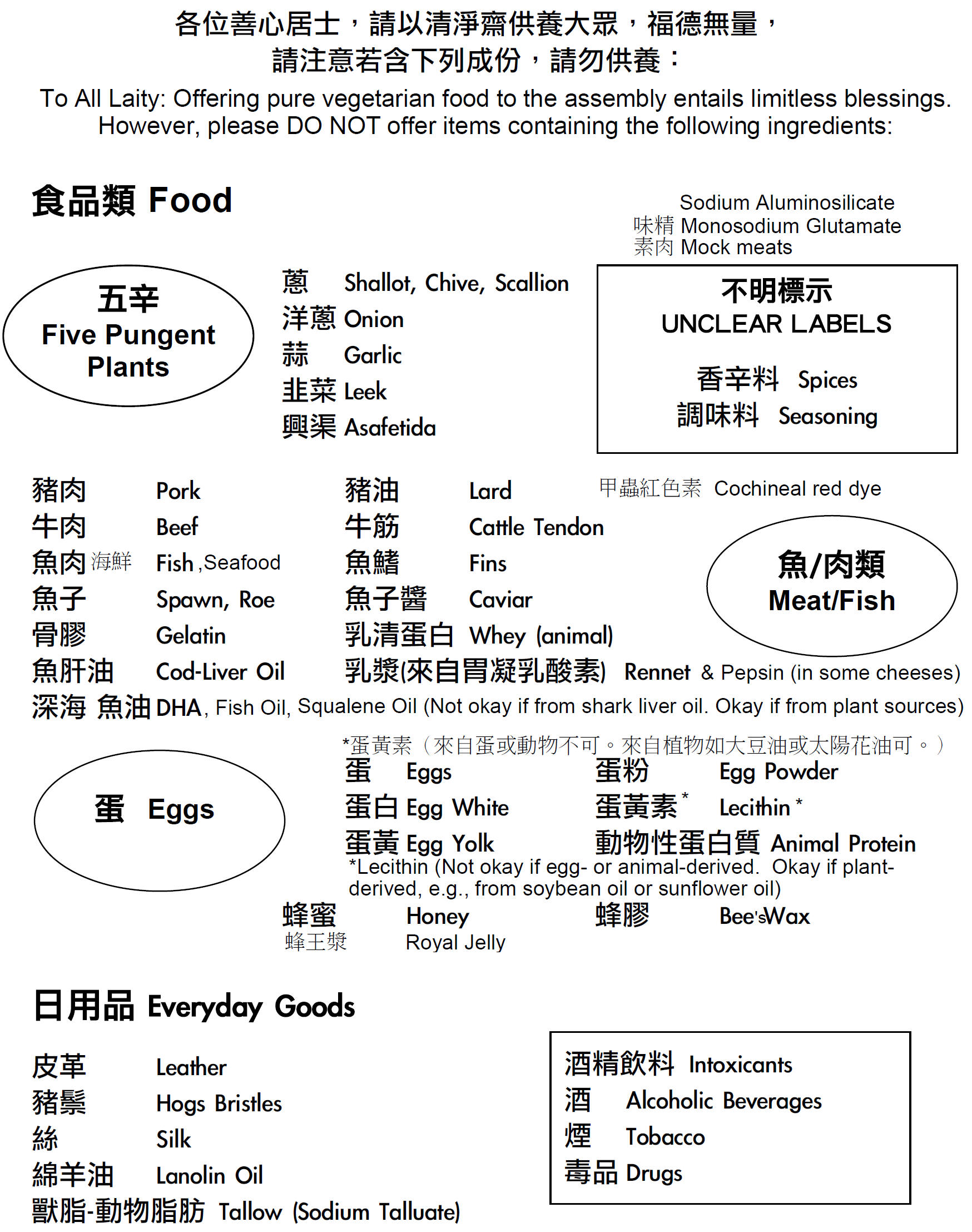
- Animal-derived
ingredients to avoid:
Eggs (yolks or egg white,
which are common in mayonnaise, donuts, muffins, pastries, mousse, and
meringue), honey
(often found in granola bars, desserts such as baklava, and some breakfast
cereals), gelatin (see paragraph below), renin or pepsin (used in some cheeses), chitosan or chitin (used as food coloring),
and bonito (in some Japanese seaweed garnish sprinkles).
See also; Helpful tips on
making offerings
[PDF]
- Gelatin is used
in Jell-O®. Look for products made with agar agar instead. Or
make your own from store-bought agar agar (commonly carried by Asian
grocers.) Gelatin is used in non-vegetarian marshmallow and some candy
as well. It is also used in capsules for medicine, so look for
"vegetarian capsules" or choose a different formulation.
- Pungent plants
to avoid: Garlic, chives,
leeks, onions, scallions, shallots, and
asafoetida (hingu, heeng, hing)
- A no-no
combination: Do not cook spinach and tofu together.
- No endorsement
is intended, but there are vegan
alternatives available in health food stores and online, such as
Vegenaise®
and
Vegan Gourmet® Dairy Alternatives. Or try out some online recipes
on vegan mayonnaise which you can make in a blender with basic ingredients
such as soy milk, safflower oil (or any vegetable oil, plus olive oil),
apple cider vinegar (optional), lemon juice and sea salt. Either blend
the dry ingredients with oil first, then slowly add the liquid (soy milk),
or alternatively, blend the dry ingredients in liquid, then add in the oil
one drop at a time. Use about 2 parts oil to 1 part soy milk, and a
couple tablespoons of lemon juice. Maple syrup, mustard, paprika, hot
sauce and black pepper are optional.
Lastly, a lot like
quitting smoking or drinking, you have to make your environment conducive to
achieving your goals. Allow a few days to get ready. Purge foods
you no longer will be eating from your environment. Talk to your
family, friends and co-workers ahead of time to get their support.
Surround yourself with individuals who are positive and supportive. If
you ever slip, get right back on track. In time, you may notice an
improvement in your temperament, meditation skill and your ability to focus. Best
of luck to you!
Please note: Asafoetida (commonly known as
"hing", "hingu", "heeng",
"asafetida", etc) is gaining in
popularity. It may be added to so-called
vegetarian dishes to
give a hint of garlic-like
flavor.
- The 5 pungent plants:
garlic,
chives,
leeks,
shallots (& onions & scallions),
asafoetida
(hing, hingu, heeng,
Ferula assafoetida, angedan, devil's dung, stinking gum, asant,
food of the gods, giant fennel, ) See:
Asafoetida
on Wikipedia
- The egg yolk transform into the chick’s belly, which is
replete with all five organs.... From observing how a mother hen hatches her chicks, we
can see that the chicken’s world is made from false thinking....
-
Chickens lay eggs with or
without the rooster....
- But in the future when you
are reborn as a chicken, you will know that it was because you
ate chicken eggs....
If you wish to know why there are
calamities & wars in the world....
千百年來碗裏羹
...槍砲屬火,原子屬水;所以說欲免世上水火劫,需要人人不殺生
...這麼小的動物,這麼小的畜生都願意活,不願意死!各位想一想,由這一點我們人都應該戒殺放生。
...試聽一聽半夜屠場裏,豬嚎、羊哭、牛哭,求救命的聲音,你就知道戰爭的劫運是從何處來的。
...畜生被殺,臨死之前,從性情中湧出的怨恨、仇憤,就生出一種毒。
註:
宋朝 願雲禪師 戒殺詩
千百年來碗裏羹 冤深似海恨難平(或作“如海”)
欲知世上刀兵劫 但聽屠門夜半聲 (或作“試聼”“半夜聲”)
For countless years the bitter stew of hate
goes boiling on;
Its vengeful broth is ocean-deep, impossible
to calm.
To learn the cause of so much conflict,
terror, hate and war,
listen to the cries at midnight by the
butcher's door.
-Dhyana Master
"Cloud of Vows", Sung Dynasty
new
Being Vegetarian and Reciting the
Buddha's Name are the Only Ways to Protect the Nation and Quell
Disasters
by Great Master Yin Guang [Seal
Light] (1861-1941)
new
On Stopping Killing!
An Essay By Great Master Lianchi
Zhuhung [Lotus Pool] [Aspiration Magnanimous] (1535-1615) People who eat meat
often make the excuse that it is natural to do so, that people were
meant to eat meat.